Services

Forward Deployed AI Engineering Squads

Appnovation's forward deployed engineering squads embed inside your organization to build, deploy, and operate experimental AI systems at production speed.

Forward Deployed AI Engineering Squads

Leading AI Development Platforms That We Support

Google Vertex AI Selected partner in Google's AI Jumpstart Program. Appnovation worked directly with Google's AI Learning Team on the Vertex AI platform, developing and evaluating foundational models through iterative training experiments to quantify and improve LLM training efficacy. Production deployments span MLB, ESPN, and a leading consumer-tech brand. AWS Bedrock Production AI infrastructure for regulated industries (Humansa Future Health Program runs on AWS, integrating four health-assessment devices with a generative-AI conversational layer). Azure AI Foundry Enterprise-grade LLM application delivery (AXA AI Sales Assistant: Azure cost estimation, Kubernetes, ArgoCD CI/CD, OAuth 2.0). Anthropic Claude and OpenAI Model selection and orchestration across the leading frontier model providers, chosen per use case for cost, latency, safety, and capability fit.

Squads purpose-built for experimental, high-velocity AI, not repurposed dev teams doing AI on the side. AI development is changing faster than internal IT teams can hire for. The frameworks shift quarterly, the tooling has a six-month half-life, and the systems being built (agentic workflows, multi-model pipelines, RAG architectures, AI-generated codebases) do not behave like the enterprise applications your operations team was trained on. This creates a 'maintaining the unmaintainable' problem: AI-built products require unique skills most IT teams do not have, and the engineers who built them are the only ones who know how they work. Appnovation's Forward Deployed Engineering Squads are small, senior teams that embed inside your organization to build, deploy, and operate non-standard AI systems end-to-end. Each squad is purpose-built for experimental, high-frequency AI work: rapid prototyping with 24 to 48 hour idea-to-working-software cycles, AI CI/CD pipelines designed for tooling that changes faster than annual release cadences, and AI product management that ships without being locked into a single model, framework, or vendor. Squads work shoulder-to-shoulder with your engineering leaders, then hand off to our managed services teams for long-term operation. This is the operating model behind our most ambitious AI engagements. Inside Pfizer's Greenhouse, an embedded Appnovation squad delivers working AI solutions to internal stakeholders within 24 to 48 hours of an idea being raised. For Santhera, the squad executed an AI-enhanced delivery model end-to-end, resulting in 95% of the project's codebase being AI-generated and delivery completed in three weeks against a typical five-sprint baseline. For Humansa, an agentic coding team shipped a complete AI product in six months. In every case, the value is not just the product, it's the squad operating model that made shipping it possible.

Trusted by

Trusted by global enterprises building AI-native products in pharmaceutical, healthcare, financial services, and consumer technology.

Related services

Where to go from here.

Three ways we take AI from ambition to operation.

How Our Squads Operate

Rapid Prototyping Squads: From Idea to Working Software in 24 to 48 Hours.

Move from idea to working AI in under 48 hours. Our squads compress discovery, design, and build into one week, delivering functional software to test and scale immediately. Experience the power of AI-accelerated development and stop planning—start building at the speed of your business.

Most enterprise AI ideas die in the validation gap between executive sponsorship and a working artifact. Backlogs are full, internal teams cannot context-switch fast enough, and by the time a prototype is ready, the question has changed.

Rapid Prototyping Squads compress that gap. A typical squad is three to five senior engineers (full-stack, AI/ML, product) who take an idea from intake meeting to working software inside a single sprint, often in 24 to 48 hours. The team operates with full autonomy: they pick the model, the stack, and the deployment target, and they ship something stakeholders can use, not a slide deck.

This is the model running inside Pfizer's Greenhouse program today. The squad's job is not to build the final product. It's to make the right answer obvious, fast enough that the business can act on it.

AI CI/CD Pipeline Build: Purpose-Built Pipelines for Non-Standard AI Products.

We design and build CI/CD pipelines specifically for AI-native products: short half-life tooling, AI-generated code, prompt and model versioning, evaluation harnesses, and the test/observe/rollback patterns standard DevOps stacks were never designed to handle.

Standard CI/CD assumes deterministic code, stable dependencies, and human-written commits. AI products break every one of those assumptions. Models drift, prompts regress, frameworks deprecate quarterly, and a meaningful share of the codebase is generated by tools (Cursor, Claude Code, Copilot) that were not in your stack 12 months ago.

Our AI CI/CD Pipeline Build sub-service installs the missing layer. We integrate model registry and version control, prompt versioning and rollback, automated evaluation harnesses, AI-code review gates, observability for non-deterministic outputs, and the deployment patterns (canary, shadow, A/B at the prompt level) that AI workloads actually need.

The clearest example is Santhera. The squad ran an AI-enhanced delivery model where 95% of the codebase, front end and content modeling, was AI-generated, with manual effort reduced to under 5% and delivery completed in three weeks against a typical five-sprint baseline. That is what a working AI CI/CD pipeline looks like in production.

AI Product Management: An SDLC Designed for AI-Native Products, Not Retrofitted For Them.

Build faster with model-agnostic product management. Our AI-native SDLC uses eval-driven iteration and decoupled tooling to ensure your architecture survives the next framework shift. Stay flexible, avoid vendor lock-in, and ship software designed for the ever-evolving AI landscape.

AI products that get tied tightly to one model or one orchestration framework become very expensive very quickly. The model gets deprecated, pricing changes, a better option launches, and the team that should be shipping spends two quarters re-platforming.

Our AI Product Management sub-service brings a senior product engineer into your squad whose explicit job is to keep the product optionable. That means model-agnostic abstractions, eval-driven release decisions (not gut calls), prompt and tool definitions held outside the application layer, and a roadmap built around capabilities rather than vendors.

This is the discipline that let the Humansa squad ship a complete AI product in six months: an agentic coding team operating on a six-month timeline, with an SDLC tuned for AI-native work from day one.

The AI-Enhanced Delivery Model: How Our Squads Use AI Internally to Compress Timelines.

Experience AI as a force multiplier. Our squads deliver 95% AI-generated codebases with manual effort under 5%, compressing months of work into weeks. From Figma designs to full backlogs in hours, we use AI-accelerated delivery to ship at speeds that traditional engineering can't touch.

Every Appnovation squad operates on our AI-enhanced delivery model: AI-driven research and scoping, AI image production and compliance validation, AI backlog generation with full-page Figma deliverables produced in hours, and AI-accelerated development under senior human oversight.

On the Santhera engagement, this model produced a codebase that was 95% AI-generated (front end and content modeling), with manual engineering effort reduced to under 5% and end-to-end delivery completed in three weeks against a typical five-sprint baseline. The squad generated 70+ backlog tickets in hours, including 10 full-page Figma deliverables, before the first developer commit.

The model is not 'AI replacing engineers'. It's senior engineers using AI as a force multiplier across every stage of the SDLC, with human judgment owning architecture, security, and the decisions that matter.

01 / Rapid Prototyping Squads: From Idea to Working Software in 24 to 48 Hours. 4 offerings

Working with Appnovation

Senior squads, not staff augmentation

Senior squads, not staff augmentation

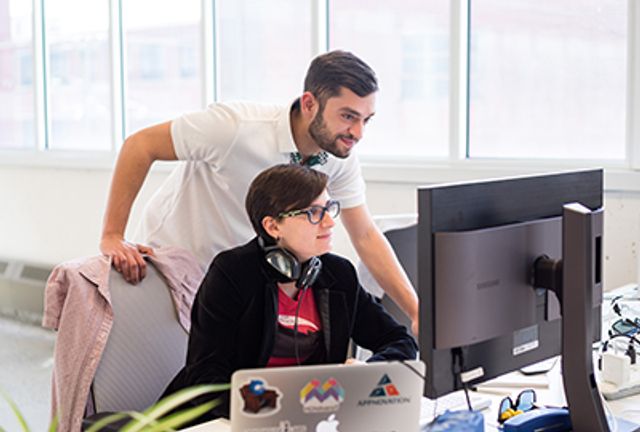
Every Forward Deployed squad is composed of senior engineers, product leads, and AI specialists. We do not pad squads with junior resources, and you do not pay for ramp-up time on someone else's training plan.
Build it, then run it (or hand it back)

Build it, then run it (or hand it back)

When the build phase ends, our squads transition cleanly into Appnovation's Managed Services for AI, or hand the system over to your internal team with full operating documentation. No orphaned systems, no 'who owns this now' conversations.
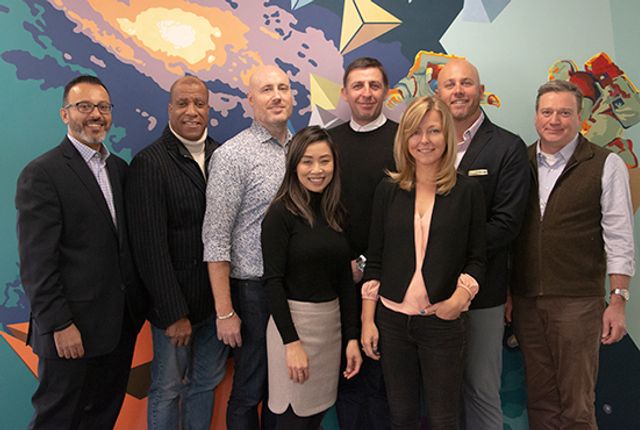
Purpose-built for experimental AI, not repurposed dev teams

Purpose-built for experimental AI, not repurposed dev teams

Our squads exist to ship non-standard AI work: agentic systems, RAG pipelines, multi-modal apps, AI-generated codebases. They are not a generalist engineering pool doing AI on the side.
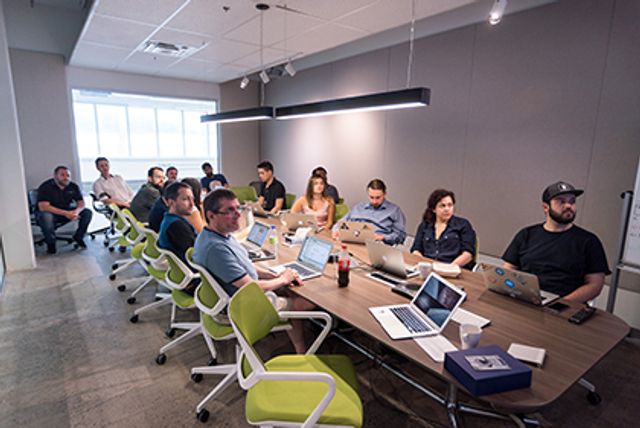
Embedded inside your environment

Embedded inside your environment

Squads work inside your tooling, your repos, your cloud, and your security perimeter. We do not run shadow infrastructure or hold your IP in our staging environment.
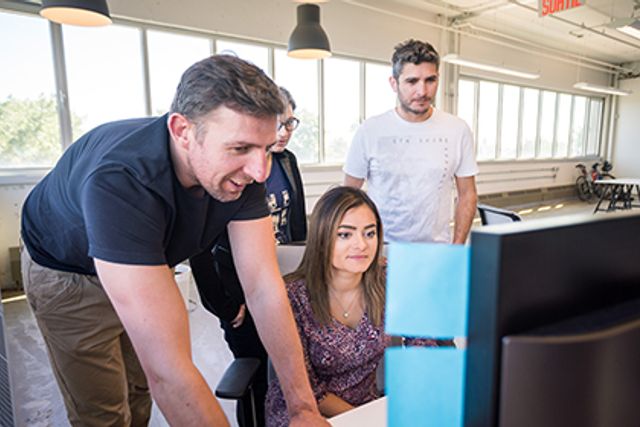
Track record at scale

Track record at scale

The Pfizer Greenhouse squad delivers AI solutions in 24 to 48 hours. The Santhera squad shipped a 95% AI-generated codebase in three weeks. The Humansa squad delivered a complete AI product in six months. The operating model is proven on real client engagements, not internal pilots.
Why Engineering Leaders Choose Appnovation for Forward Deployed Squads

Why Engineering Leaders Choose Appnovation for Forward Deployed Squads

Here is what sets our forward deployed squads apart when you need to build, deploy, and operate experimental AI systems at production speed.

  • 24 to 48 hour idea-to-working-software cycles, proven inside the Pfizer Greenhouse program.
  • AI-enhanced delivery model that produced a 95% AI-generated codebase for Santhera in three weeks (vs a typical five-sprint baseline).
  • Agentic coding teams that have shipped complete AI products end-to-end on six-month timelines (Humansa engagement).
  • Squad composition tuned for AI-native work: senior full-stack, AI/ML, and product engineers, no junior padding, no generalist substitution.
  • Embedded operating model: squads work inside your repos, cloud, and security perimeter, then hand off cleanly to internal teams or to Appnovation's Managed Services for AI.
  • Builder-to-builder partnership with CTOs and VPs of Engineering, transparent on velocity, evaluation results, model selection, and trade-offs.
Get In Touch

Get in touch and get started today. We're ready!

Required fields are marked with *. Prefer email? contact@appnovation.com